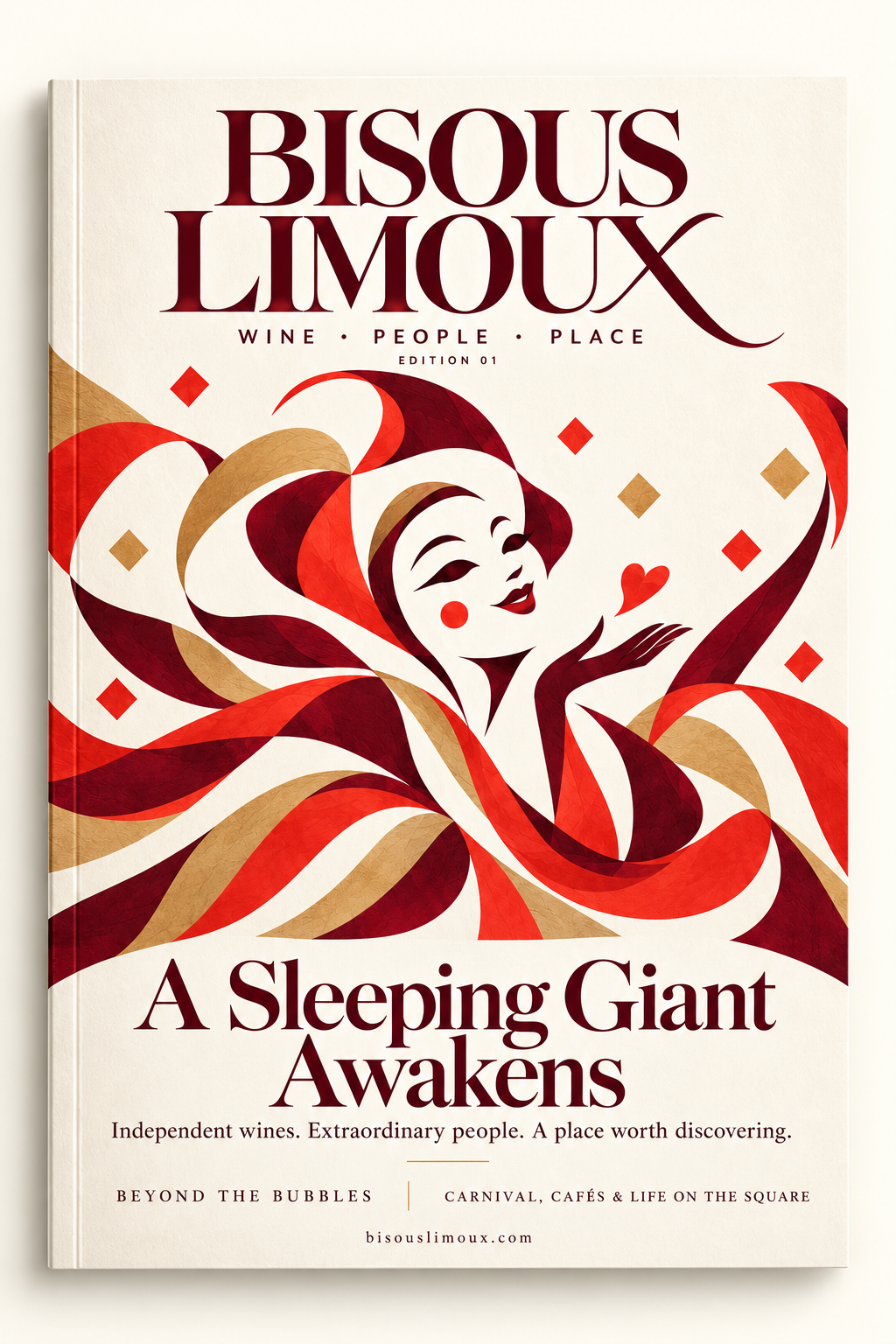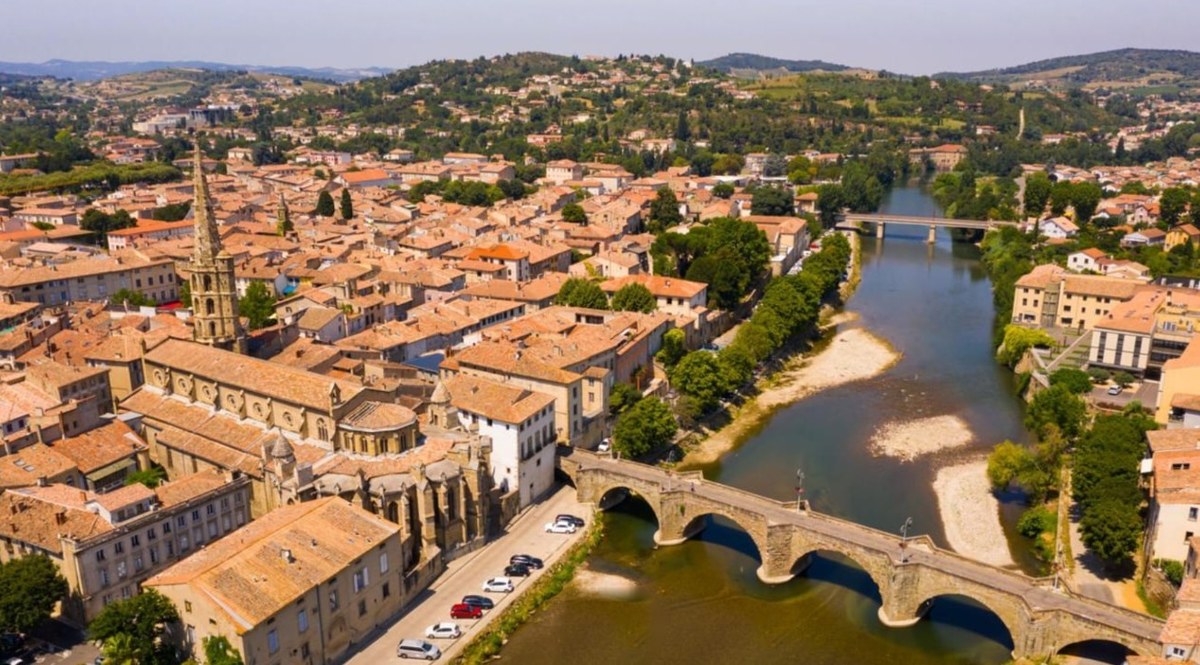
There is a town in southern France that has never quite learned to boast about itself.
It sits beside the River Aude, where the foothills of the Pyrenees begin to soften into vineyard country. Beyond its streets lie wooded hills, ancient villages, abbeys and a landscape that seems to belong to several different versions of France at once.
This is Limoux. And something interesting is happening here.
For generations, the town has been associated with Blanquette, the local sparkling wine whose history reaches back into the early centuries of French winemaking. Yet while Champagne conquered the world and other French regions became international destinations, Limoux remained comparatively little known.
That may be about to change.
A history worth rediscovering
The familiar story begins at the Abbey of Saint-Hilaire, a short journey from Limoux.
According to local tradition, Benedictine monks were producing sparkling wine here in 1531, long before Champagne acquired its international reputation. The precise chronology remains a matter of historical debate, but Limoux's early association with sparkling wine is firmly established in the region's identity.
What matters today is not simply who was first. It is that Limoux possesses a distinctive winemaking tradition that has survived for centuries.
Blanquette de Limoux received appellation recognition in 1938. Crémant de Limoux followed in 1990, giving the region another expression of its sparkling-wine heritage.
And while the name Crémant has become increasingly familiar to wine drinkers looking beyond Champagne, Limoux has an opportunity to introduce itself to a much wider audience.
A landscape in a glass
Wine here begins with geography.
The vineyards of Limoux occupy a remarkable meeting place between Mediterranean warmth, Atlantic influences and the cooler air descending from the Pyrenees.
This combination gives the region a character distinct from the sun-baked image so often associated with southern France.
Mauzac, the traditional grape of Blanquette, remains central to the region's identity. Chardonnay, Chenin Blanc and Pinot Noir contribute to the production of Crémant de Limoux.
The results can be wonderfully varied: fresh, precise sparkling wines; more generous, textured expressions; and bottles that reflect the individual choices of the people who make them.
But to understand Limoux properly, one must leave the tasting room.
The people behind the vineyards
Perhaps the most compelling development in Limoux is the opportunity to discover the independent growers and producers whose work gives the region its character.
Some have inherited vineyards cultivated by generations of the same family. Others are pursuing new ideas about farming, fermentation and the relationship between wine and landscape.
These are stories that deserve to be told individually.
At Bisous Limoux, we intend to visit the vineyards, meet the growers and explore the decisions behind the wines. Not simply to recommend bottles, but to understand the people, places and traditions that produced them.
Because a wine region becomes interesting when its personalities begin to emerge.
More than a wine destination
Limoux has another advantage: it is a town worth visiting even when the vineyards are closed.
Its central square remains a place of conversation and café life. Its carnival, one of the most distinctive traditions in France, gives the town a theatrical identity unlike almost anywhere else.
There are markets, restaurants, music, country roads and the pleasures of a landscape that has not been entirely reorganised for tourism.
Carcassonne lies to the north. The Pyrenees rise to the south. Between them is a part of Occitanie that rewards curiosity.
It is possible to arrive in Limoux for a glass of Crémant and discover that the wine was merely the introduction.
A different kind of awakening
There is a temptation, whenever an overlooked destination begins attracting attention, to declare it the next great discovery.
Limoux deserves something more thoughtful than that.
Its appeal lies partly in the fact that it remains itself: a working French town with its own rhythms, traditions and imperfections.
The opportunity is not to reinvent Limoux for visitors, but to help visitors understand what is already here.
The rise of interest in Crémant may provide the introduction. Independent winemakers may give the region a new international voice. Its restaurants, markets, countryside and culture will provide reasons to stay.
And perhaps that is what makes this moment so interesting.
A sleeping giant does not need to become somewhere else when it wakes.
It simply needs to be seen.
Bisous Limoux is an independent online magazine exploring the wines, people, places and culture of Limoux and the surrounding region of Occitanie. Discover more stories from Limoux, twice a month, with A Little Bisous in Your Inbox.